

Kāma Coffee · Green offer list · as of 11/10/2026
Green Indian Arabica for UK roasters and importers. Single-estate lots from a centuries-old family estate group in the birthplace of Indian Arabica. Request samples, or book a call with the founder.
Coffee grown inside a forest
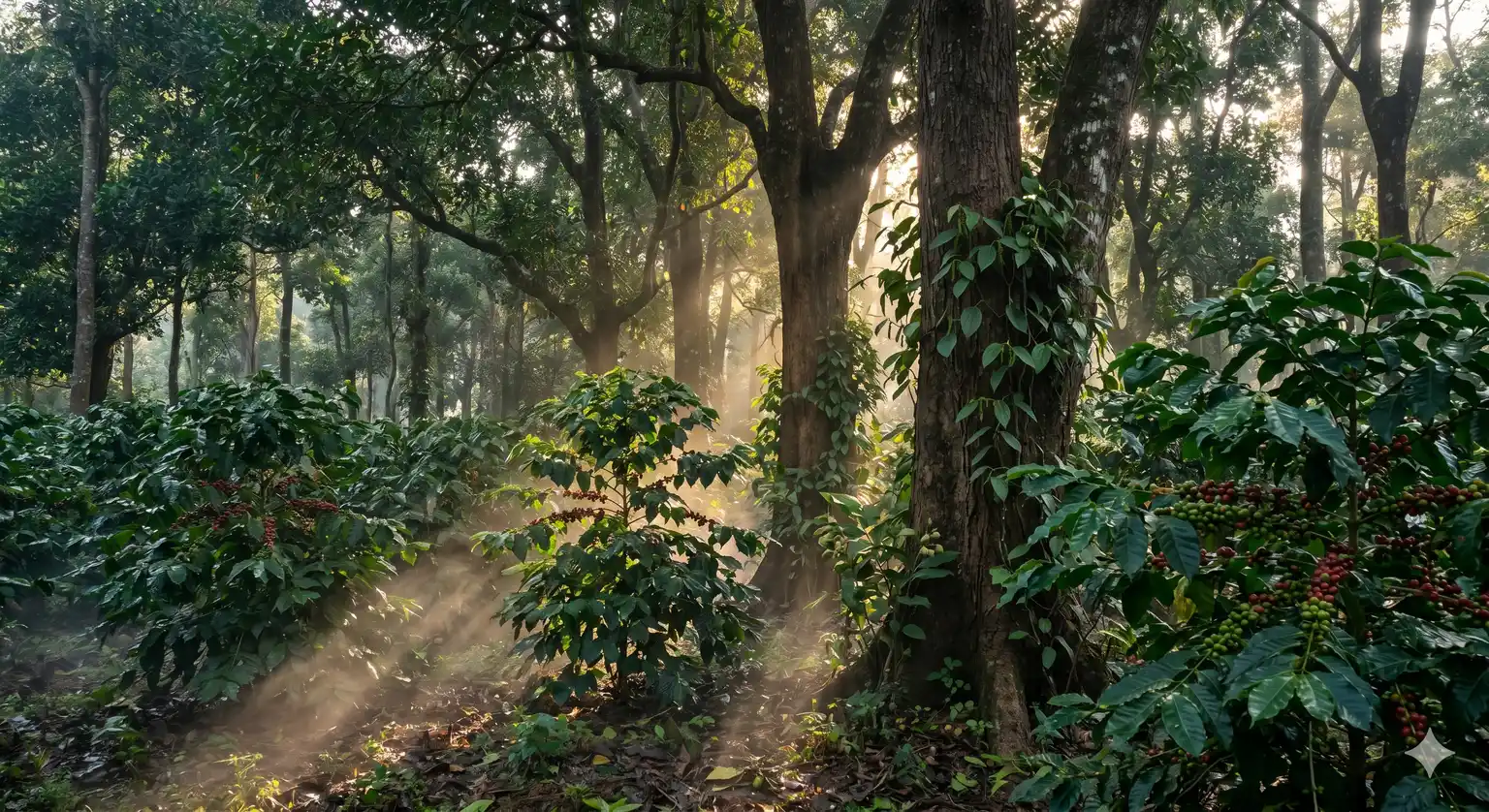
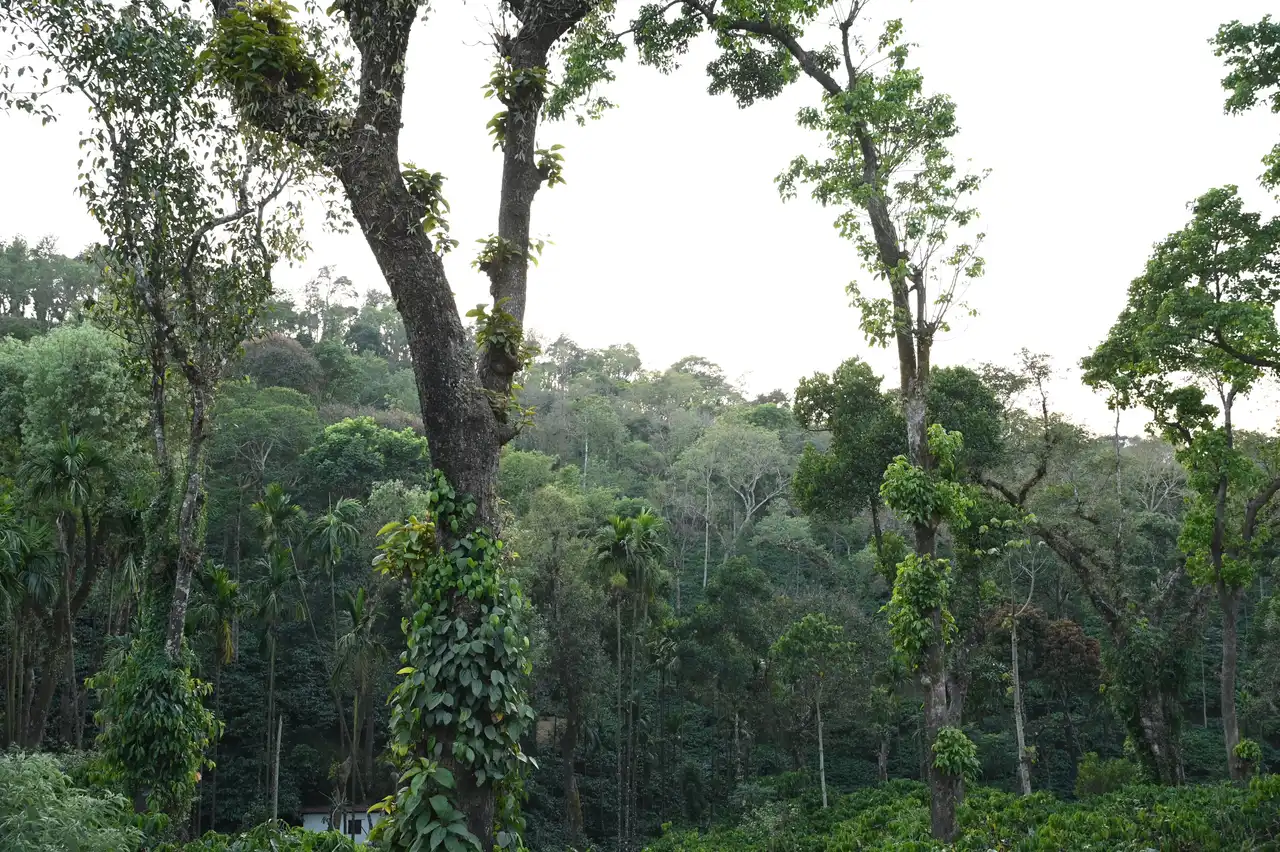
Around 1670 a Sufi saint called Baba Budan carried seven coffee seeds out of Yemen and planted them in the hills above Chikmagalur, in what is now Karnataka. The hills carry his name, and the estate group Kāma buys from still farms them. By the 1840s Indian Arabica was selling at London auctions as Mysore coffee. Roughly 90% of India's coffee still grows in the Western Ghats, and nearly all of it grows under shade: 200 to 250 trees per hectare, pepper vines on the trunks, fruit trees between the rows.
One family, two estates, since 1864
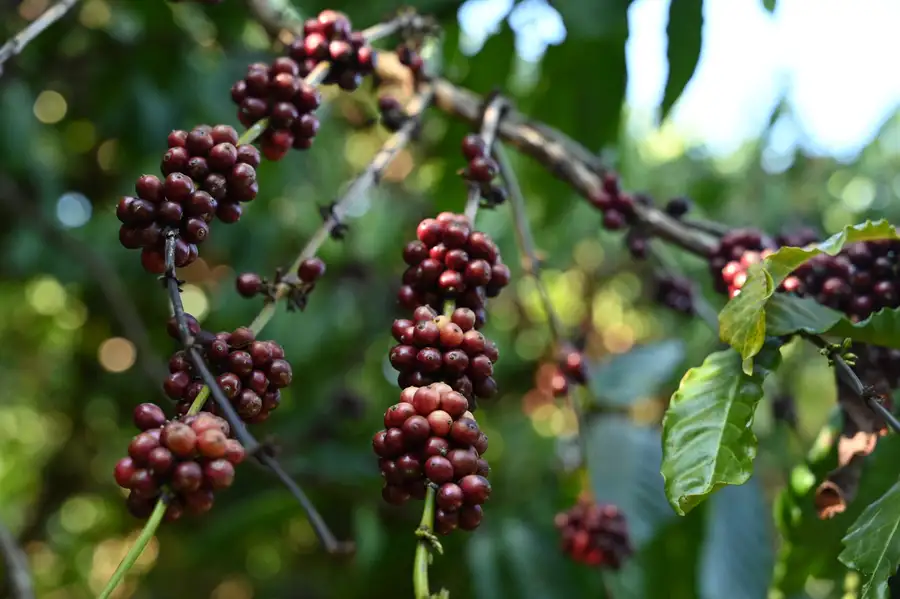
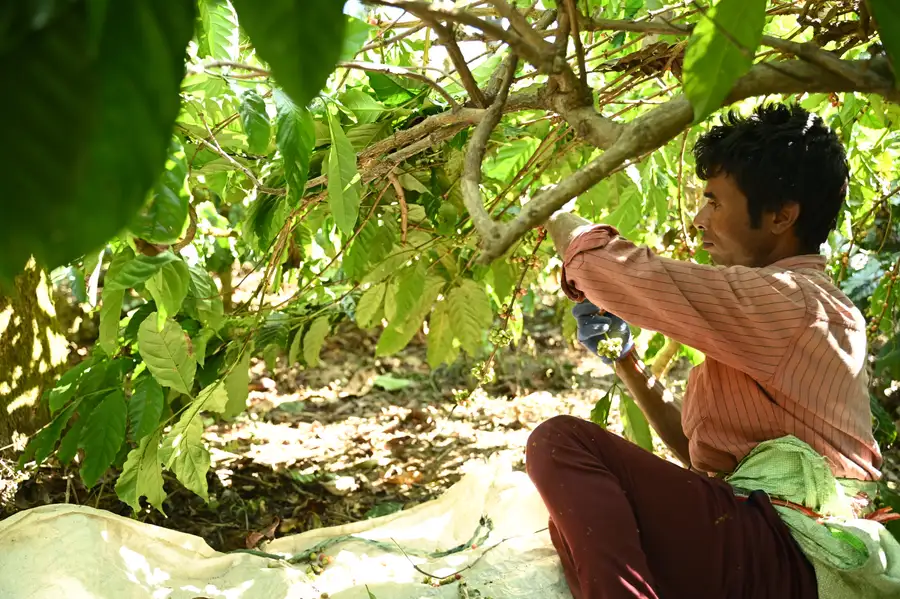
Kāma sources directly from one family-run estate group in Karnataka. The family has grown coffee since 1864 and is now in its fifth generation. Harley Estate, in Manjarabad, was planted in 1864; Kalledevarapura, in the Baba Budan hills, in 1890. Both grow Arabica under heavy forest shade among pepper and fruit trees, and Manjarabad also grows Old Peridinia robusta. Harvest runs from December into March, and every cherry is picked by hand in several rounds, so only ripe fruit reaches the pulper.
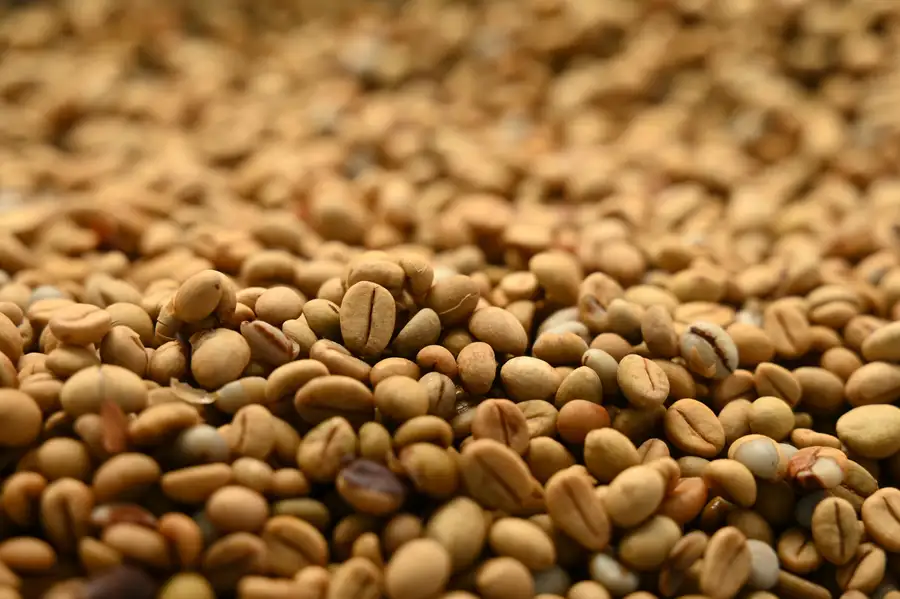
The record is public. The group was a finalist or winner at the Flavour of India Fine Cup Awards most years from 2003 to 2016, took Best Robusta from India four years running, and supplied illycaffè from 2002 to 2007, with Best Regional and Best National supplier prizes in 2003 and 2004. It exports to several countries and already supplies established importers.
Kāma Coffee sources from centuries’ old Indian estates where coffee is grown within long-term, shade-based agricultural systems. These farms operate within biodiverse environments, often alongside fruit, spice and native tree cover.
Farming practices are guided by timing, balance, and long-term plant health, not maximum short-term yield. This approach reflects a farming culture where coffee is one part of a broader ecosystem and livelihood, not an extractive crop.
Working with long-established estates provides a stable foundation for consistency, traceability and repeatable flavour year after year.
Where the quality is decided
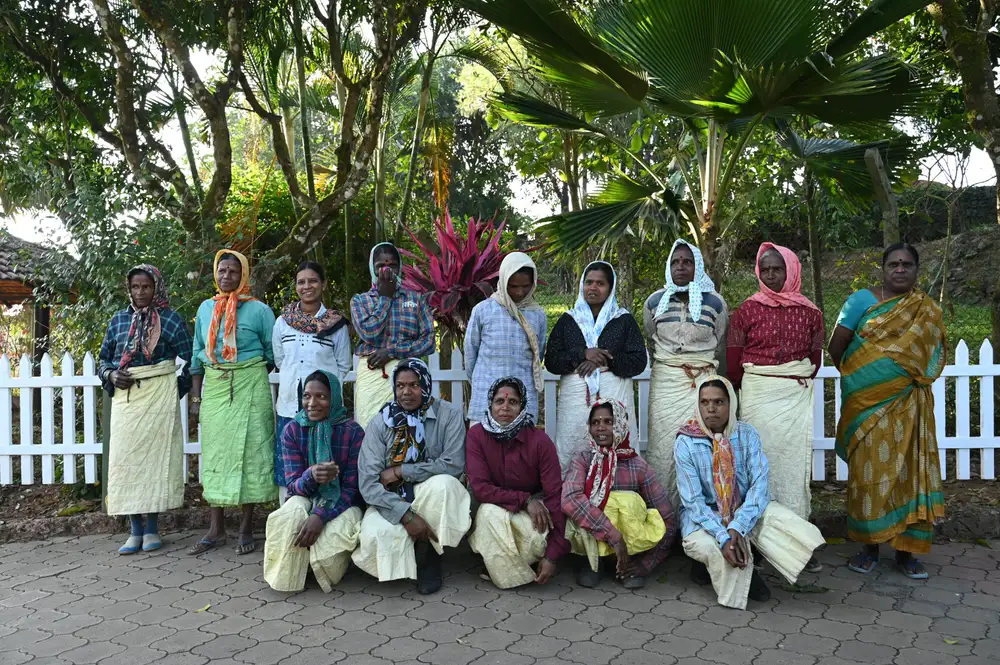
Roughly 60 to 70% of the estate's costs are labour, and most of that labour is sorting. The six steps below are how the group describes its own process. Kāma chose the estate because each step is done by hand or checked by a person, and that is what makes a lot behave the same way in your roaster in March as it did in the sample.
Selective harvesting. Cherries are picked in several rounds, ripe ones only, because ripe and unripe fruit behave differently in the pulper and the roaster.
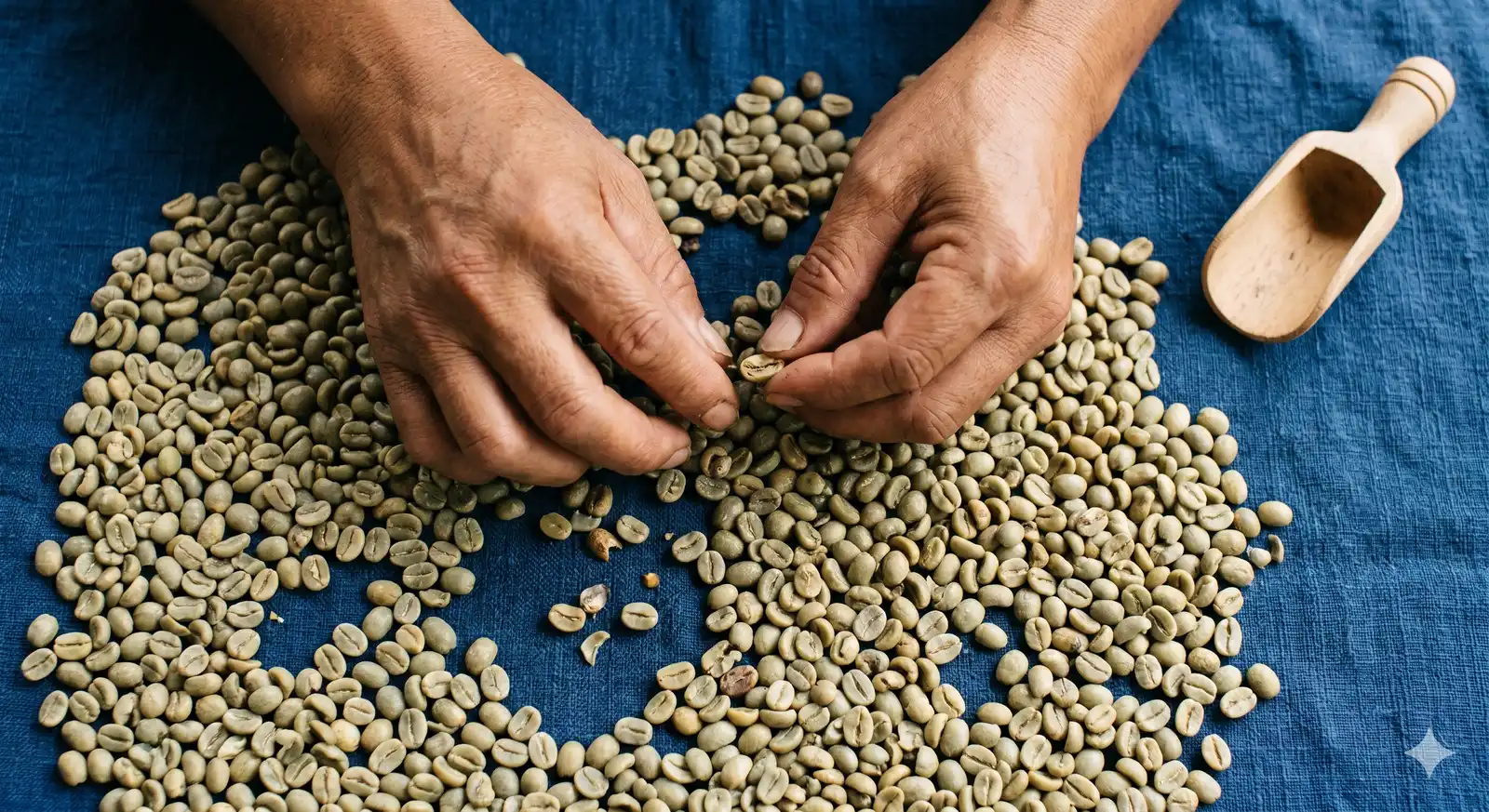
Sorting before pulping. Cherries are spread and inspected by hand, so defects leave before they can mark the cup.
Controlled processing. Manual and mechanical sorting, then fermentation and washing to remove mucilage and shape flavour.
Drying on raised beds. Airflow dries the parchment evenly, and moisture is what decides how a coffee travels.
Dry milling and grading. Pre-cleaning, hulling, grading, then electronic and manual sorting. Uniformity is what lets you repeat a roast profile.
Storage and dispatch. Food-grade packing and storage, with dispatch treated as a quality step rather than a formality.
What the cup does
Shade slows ripening, and slow ripening builds sugar and density in beans grown lower than most speciality origins. The varieties are Indian: S795, bred at Balehonnur in the 1940s and still 25 to 30% of India's Arabica acreage, alongside Selection 9 and Chandragiri. The washed lots cup rounded, nutty and smooth with low acidity, which is why the group's Plantation A suits well-rested coffee and premium blends where consistency is critical. The fermented and honey lots are where the range opens up; the offer list below says how far.
The founder
Kāma Coffee was founded by Gayathri Keerthana (GK) in Bristol.
It comes from a simple belief: coffee is not just a product, it is a daily act of care. This brand is her way of building something sensory, trustworthy, and quietly obsessive, one bag at a time.
GK grew up in Tamil Nadu and runs Kāma from Bristol. The roasted side of the business, roasted in Bristol with Triple Co, is served in cafés and bakeries in Bristol and London. Before coffee she ran a non-profit in rural India. She found the estate through the chair of the Coffee Board of India, buys from it directly, and answers every enquiry on this page herself.

Who already serves it
Kāma's roasted coffee is on the counter at these cafés and bakeries:
The Loaf, Mark's Bakery, Society Cafe (Bristol); Perks and White (London)
The offer list
Every lot shows estate, region, altitude, variety, process, harvest, grade and availability. Tasting notes and scores come from the estate's own green lists. The range runs from a washed Plantation A (stone fruit, dark chocolate and citrus, low acidity) through pulped sun-dried honeys such as Yellow Honey (chocolate, floral, caramel) to fermented naturals such as Wet Plum (sweet nectarine, mixed berries, jammy). Tick the lots you want to cup, then request samples below. Terms come by email in reply, never on this page.
Rows marked SAMPLE stand in for the current list until it is loaded. They show the format, not stock.
| Sample | Estate | Region | Altitude | Variety | Process | Harvest | Grade | Availability |
|---|---|---|---|---|---|---|---|---|
| SAMPLE | Classic Group (Karnataka) | Karnataka | Washed | Dec–Mar | Plantation A | Sample · confirm with owner | ||
| SAMPLE | Classic Group (Karnataka) | Manjarabad | Selection 9 | Natural | Dec–Mar | Sample · confirm with owner | ||
| SAMPLE | Classic Group (Karnataka) | Manjarabad | Selection 9 & Chandragiri | PSD (honey) | Dec–Mar | Sample · confirm with owner |
The list is being updated. Send an enquiry and GK will reply with what is available.
List as of 11/10/2026.
Request samples
Thank you. Your request has reached GK, and she answers every one herself.
Send an enquiry
Thank you. Your enquiry has reached GK, and she answers every one herself.
kamacoffee.co.uk/green · Samples and terms on request through the site.